Greetings all,
In class this week, we learned about two topics, the first of which was PBL (Project-Based Learning) and how some schools are using PBL to give learners more freedom. We discussed the benefits of this system, its drawbacks, how to implement it, and which age group it works best for. The second topic was AI being used to replace teachers and tutors. Does the student actually benefit from a personalized AI tutor? Do they actually learn more?
PBL
What is PBL? For those unfamiliar, PBL stands for Project-Based Learning. It is a method of teaching that moves away from standardized testing and lectures and focuses more on student-led projects to demonstrate learning. It replaces tests with Exhibition Nights where parents, friends, and community members come and view student work. Instead of report cards, students engage in reflection to see what went well and what can be learned for next time. PBL also places an emphasis on soft skills such as leadership, collaboration, communication, and self-advocacy. PBL’s ultimate goal is to better prepare students for real jobs through these soft skills.
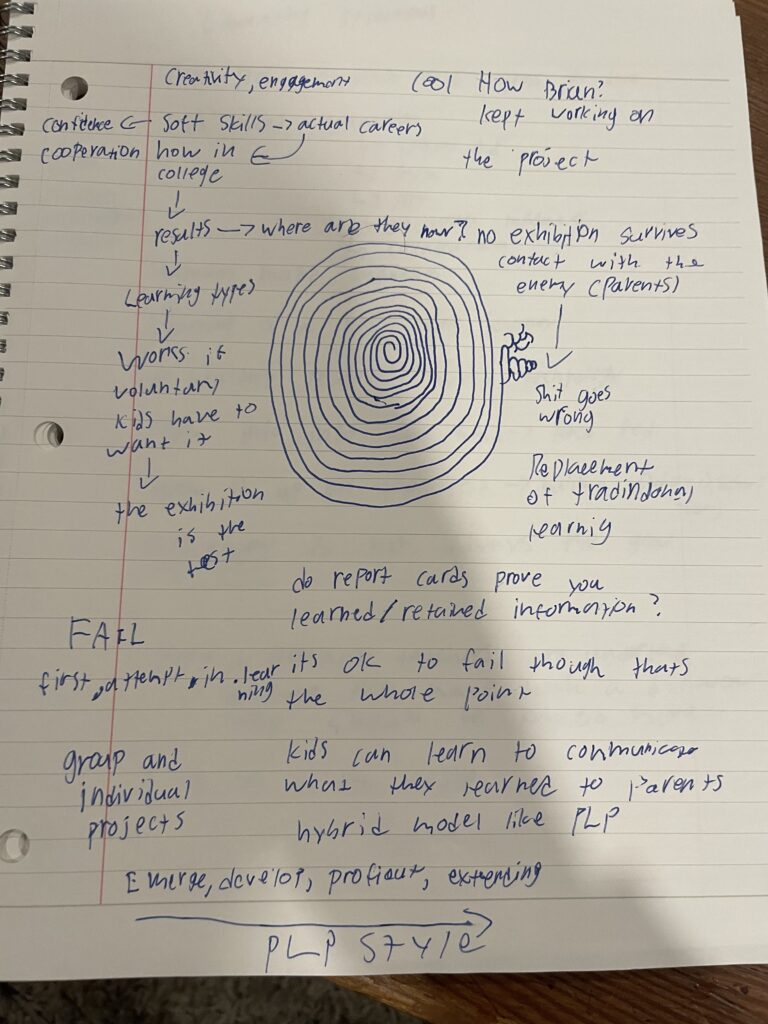
Personally, I think PBL is great for English and Social Studies, but I am also biased. Long story short, there was a PBL program at my high school that taught those two subjects in the PBL format. They also taught math but have since gotten rid of it when they could not find a way to put it into PBL. Using my own personal experience, I can say that PBL is great for a lot of things; building those soft skills of presenting, collaborating, and leading is really great, but it is also a lot more work, so one of the keys for me is keeping PBL optional. Not every student learns best from a largely self-guided approach, and the student has to want it. The second key for me is having some subjects be non-PBL, as with how the current system is set up, test-taking and studying are skills that students need to have to get into post-secondary.
A fair critique of PBL is: how do we know students are learning anything if we don’t assess them? They talk about this in the video “Most Likely to Succeed.” Parents are worried about measuring their child’s knowledge and success without a report card or test grade, which is a fair concern, especially because PBL is a newer system that they are not used to. My argument is that the exhibition is the test: can the student create and present their learning in a way that is understandable to what could be total strangers. I would also ask if report cards are proof of learning, or are they proof that your child can memorize something and then recite it? Which is that an ability they need in today’s world? Absolutely! But should it be the only way to measure a student’s knowledge and ability? No.
The biggest part of PBL that I will take and apply in my future classrooms is that it’s ok to “FAIL”; a fail is just a first attempt in learning and as long as you reflect and strive to do better next time, I would be ecstatic if my students are comfortable with failure, with being unsure, and, of course, asking for help.
If you are at all curious about my experiences in PBL check out my old blog: Here
AI as a Teacher:
Our second topic was an article about a branch of private, for-profit US schools known as “Alpha“. The model calls for using an adaptive and personalized AI model to teach kids in K-12 in core subjects. This article was the first time I’d ever heard of Alpha schools, and my initial gut reaction to it was, “This is stupid.” After reading the article and learning more about Alpha Schools, my thought was, “This is even more stupid”.
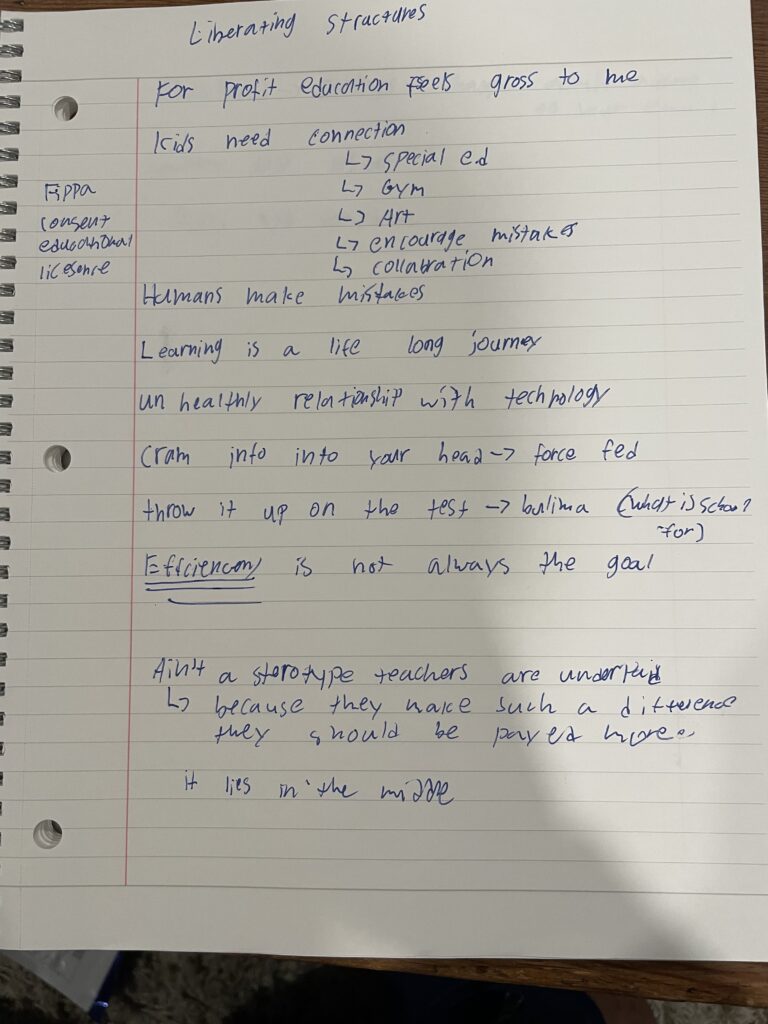
The basic premise of an Alpha School is that students spend two hours or more, depending on the completion of tasks working with an AI model that responds to them personally and adapts to them. My first problem is how students are supposed to learn all of the social aspects of life communication, collaboration, even down to things like sharing and waiting if they are stuck in a room with a robot that gives them things immediately, with no one else their age around.
Another issue I take with this is: how are they supposed to make mistakes and learn from them in such a sanitized environment? Assuming this AI model never messes up, it teaches kids that they have to be perfect all the time, which is not only unhealthy, but it’s also not true; humans make mistakes all the time and learning is a lifelong journey. The CEO of Alpha will claim that “Alpha is more efficient” but that should not be the goal. Any learning is messy and slow, and that’s the whole point.
Speaking from a personal perspective, I would not be where I am today without forming a real human connection with so many of my teachers, teachers who had patience with me when I struggled, let me try again if I failed, or pushed me when I needed pushing. Those kinds of teachers are special, and it is something AI could never replicate.